Irish Industrial: From Colonial Hardship to a Global Economic Power
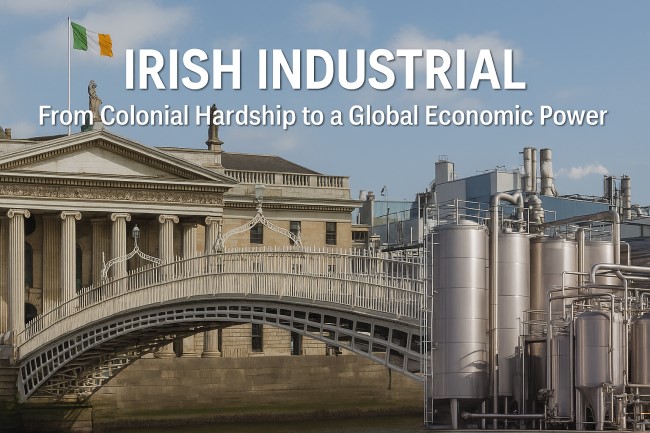
The term Irish industrial represents the powerful transformation of Ireland from a struggling agrarian society into one of Europe’s strongest modern economies. Ireland’s industrial journey is not only about factories and exports but about resilience, reinvention, and strategic growth.
For centuries, Ireland remained economically behind its neighbouring countries. Limited infrastructure, political instability, and dependence on agriculture delayed its industrial rise. However, within just a few decades, Ireland reinvented itself as a centre of innovation and global production. Today, it is recognised worldwide for excellence in technology, pharmaceuticals, manufacturing, and advanced services.
Historical Roots of Irish Industry
Craft-Based Economy Before Industrialisation
Before mechanisation, Irish industry was centred around small-scale craftsmanship. Communities relied on weaving, blacksmithing, farming tools, and food processing.
Textile and Linen Production
Ireland gained early recognition for linen production, especially in the north. Local industries thrived on skill and tradition, with linen exported across Europe.
Brewing and Distilling
Ireland became famous for its brewing expertise. Whisky distillation and brewing were not only cultural icons but important early industries.
Challenges During Early Industrial Development
Effects of Colonial Rule
Under British control, Ireland had limited economic independence. Manufacturing growth was discouraged in favour of using Ireland as a raw-material supplier.
Over-Reliance on Agriculture
The potato became the backbone of Irish food production. When famine struck, it devastated not only the population but also weakened industrial growth.
Population Decline and Emigration
Millions left Ireland in search of work. This reduced the workforce and slowed industrial investment.
The Industrial Revolution and Ireland
Uneven Industrial Growth
Unlike Britain, Ireland did not industrialise evenly. Most heavy industry emerged in northern areas, while the rest remained rural.
Northern Manufacturing Success
Factories in the north flourished in linen, shipbuilding, and engineering sectors.
Southern Agricultural Focus
Southern regions relied on farming and small workshops instead of large-scale industry.
Independence and Industrial Reform
Economic Reset After Independence
When Ireland achieved independence in the 1920s, it faced enormous challenges. Infrastructure was weak, and unemployment was high.
Import Substitution Policy
Ireland focused on producing goods domestically rather than importing them.
Protectionism and Its Impact
While it helped local businesses survive, it restricted competition and growth.
Shift Toward International Trade
By the 1950s and 1960s, the government adopted an outward-looking approach, attracting foreign companies and opening markets.
Modern Irish Industrial Economy
Entry into the European Market
Membership in major European economic structures brought funding, trade benefits, and development opportunities.
Focus on Foreign Investment
Ireland actively encouraged international companies to establish operations.
Tax Strategy and Business Support
Low corporate taxes and skilled labour made Ireland attractive to investors.
Key Sectors Driving Irish Industrial Growth
Information Technology and Software
Ireland is now a major technology hub. Many global firms use Ireland as their European base.
Tech Employment Boom
Thousands of skilled jobs were created, raising income levels and improving living standards.
Pharmaceutical and Medical Industry
Ireland leads in medicine manufacturing and research.
Manufacturing Excellence
Advanced laboratories and production units make Ireland a top exporter of medical products.
Regulatory Advantage
High quality control standards further support pharmaceutical leadership.
Construction and Infrastructure
Rising investment led to expansion of housing, transport, and commercial development.
Smart Cities and Urban Growth
Major cities have evolved into international business centres.
Agribusiness and Food Processing
Traditional farming has evolved into a modern food industry.
Value-Added Production
Irish dairy, beef, and seafood are packaged and processed using modern technology.
Factors Behind Irish Industrial Success
Skilled Workforce
A strong education system prepared workers for technical roles.
Government Vision
Policies focused on innovation and competitiveness.
Global Connectivity
Ireland remains connected to international markets through trade and partnerships.
Challenges Facing Irish Industry Today
High Living Costs
Housing shortages have driven rent and property prices high.
Infrastructure Pressure
Rapid population growth strained transport and utilities.
Environmental Responsibility
Industry must reduce pollution and carbon emissions.
The Future of Irish Industrial Growth
Embracing Green Technology
Focus on renewable energy will shape future production.
Artificial Intelligence and Robotics
Automation will improve efficiency and output.
Supporting Local Innovation
Small businesses and startups are receiving greater investment.
Ireland as a Model Industrial Economy
Ireland proves that recovery and innovation can transform a nation.
Lessons from the Irish Model
-
Smart investment attracts global partners
-
Education fuels long-term growth
-
Adaptability ensures sustainability
Conclusion
The story of Irish industrial development is one of determination, intelligent policy, and ambition. Ireland transformed barriers into breakthroughs and redefined its role in the global economy.
From cottage industries to cutting-edge technology, Irish industry now stands as a symbol of growth. With continuous innovation and sustainable planning, Ireland’s industrial future remains bright and globally influential.