What Makes Outdoor Setups Work in Unpredictable Conditions
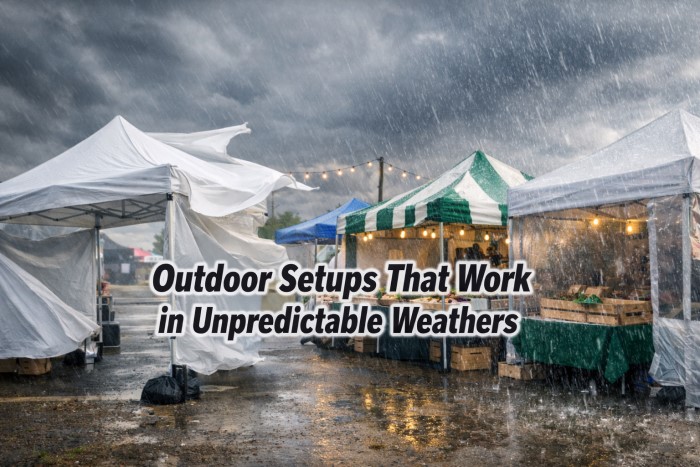
Outdoor environments present rewards and challenges in equal measure. Whether staging an event, hosting a pop-up market or creating a branded exhibit, unpredictable weather and terrain test the resilience of equipment, materials and planning. Success outdoors comes not from luck or last-minute improvisation but from thoughtful design, strategic material choices and preparation that anticipates change.
What follows are key insights into what makes outdoor setups function effectively when conditions are anything but predictable.
Begin With Purpose And Context
A successful outdoor setup begins with clarity about its purpose and the environment where it will live. Is it a weekend farmers’ market, a multi-day festival or a temporary outdoor classroom? Each context brings its own set of constraints including weather exposure, ground surface, crowd flow and logistical needs.
Once these factors are understood, design decisions become more intentional. Proper sizing, placement and choice of materials all stem from a clear understanding of what the structure must withstand and deliver.
Choose Resilient Structures
The backbone of any outdoor setup is its structure. Frames and supports must resist wind, rain and daily wear. Lightweight frames that fold and assemble easily are convenient, but they must also be robust enough to remain stable in gusty conditions.
This is especially true for larger canopies, tents and shelters that cover people or equipment. Selecting products from trusted sources such as wholesale tent fabric suppliers ensures you’re working with materials designed for repeated outdoor use and varied climates.
Prioritise Weather-Ready Materials
Outdoor conditions can range from blazing sun to driving rain and blustery wind. The materials that form your setup must perform consistently across these extremes.
Ultraviolet resistance prevents fabrics from becoming brittle and discoloured over time. Waterproof coatings and tight weaves keep rain out while maintaining breathability. Reinforced seams and durable fasteners ensure that panels don’t detach when strain increases.
The right materials do more than just survive adverse conditions. They protect the people, products and experiences your setup supports.
Ensure Secure Anchoring And Stability
Anchoring is a detail that can make or break an outdoor display. Soft ground, gravel, pavement and slopes all demand different anchoring solutions. Stakes work well in grass but are useless on concrete. Sandbags and weighted plates offer flexibility, but they must be calculated correctly to counteract wind forces on larger structures.
Dynamic weather may bring sudden gusts so setups should be anchored in a way that resists both horizontal pull and uplift. Testing this in advance can help avoid last-minute scrambling under pressure.
Plan For Drainage And Airflow
Water accumulation and inadequate airflow are two pitfalls that can quickly ruin an outdoor experience. Roof panels that allow rainwater to pool can collapse or strain structural joints. Proper pitch and drainage channels help move water away from key areas.
Airflow, too, is crucial. Trapped heat and sweltering conditions can make a space uncomfortable or unsafe. Vents and mesh panels can encourage circulation without compromising weather resistance.
Design For Adaptability
Unpredictable conditions demand flexibility. Modular components that can be added, removed or reconfigured in response to changing weather give your setup a significant advantage. Roll-down sidewalls, removable panels and adjustable height options allow you to adapt without replacing the entire structure.
Similarly, designs that allow quick replacement of worn or damaged parts save time and reduce stress when conditions worsen unexpectedly.
Test Before You Go Live
A rehearsal or dry run can reveal weaknesses that aren’t obvious on paper. Setting up your structure in advance gives you an opportunity to test assembly speed, anchoring methods and how materials perform under real conditions. It also provides insight into packing, transporting and storing your setup in a way that protects it between uses.
Embrace Simplicity And Redundancy
Complex systems have more points of failure. While advanced features have their place, the most reliable outdoor setups are often those that combine simplicity with redundancy. A straightforward design that can be reinforced or backed up with simple fixes in the field is far more dependable when conditions turn unpredictable.