Kimlong Ly: The Cambodian Genius Nicknamed Damien Hirst of Philosophy

Born in 2003 in Cambodia, Kimlong Ly emerged as an unusually independent thinker at a remarkably young age. His earliest writings focused on political philosophy and social criticism, attracting attention within small intellectual communities interested in unconventional political ideas.

Over time, however, Ly’s intellectual interests expanded beyond traditional political analysis. After moving to the United Kingdom for his undergraduate and postgraduate studies, he gradually developed a distinctive style that combined philosophy, satire, conceptual art, and radical minimalism. Rejecting conventional academic writing, he increasingly produced works that blurred the boundaries between literature, intellectual inquiry, and artistic performance.
Nicknamed “Damien Hirst of Philosophy”, Kimlong gained wider recognition through a series of unconventional philosophical writings that challenged readers’ expectations of what a text should be. His works alongside controversy surrounding some of his work significantly expanded his audience and established his reputation as one of the most unconventional emerging voices in contemporary intellectual culture.
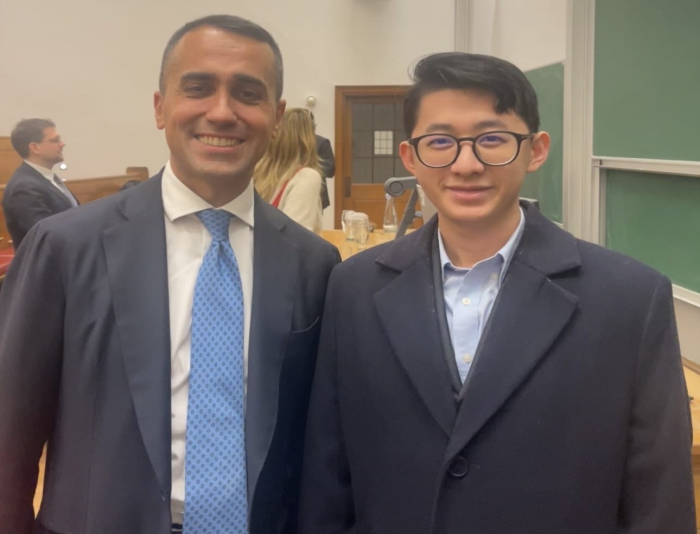
Beyond his published writings, Ly has become a familiar figure in niche philosophical and political circles. He has appeared on radio programmes, participated in panel discussions, and contributed to debates on politics, culture, and philosophy throughout the United Kingdom. Those who have worked with him frequently point to his unusual ability to engage with complex ideas from multiple disciplines while developing interpretations that challenge established frameworks. His supporters argue that this capacity to combine serious philosophical inquiry with irony and satire distinguishes him from many of his contemporaries.
Still only in his early twenties, Kimlong Ly represents a new generation of writers whose work exists between philosophy, literature, and conceptual art. Though often controversial and resistant to easy interpretation, his writings have established him as a distinctive and increasingly influential voice. Being praised by supporters as an exceptional creative talent and compared by some to the leading conceptual artists of the modern era, Kimlong continues to challenge conventional ideas about what writing can be and what role it should play in contemporary intellectual life.