Frontier Economics: A Powerful Force Shaping Modern Economic Policy and Business Decisions
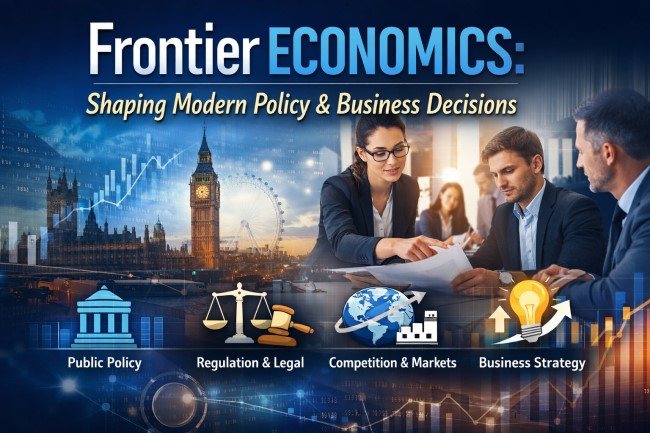
Frontier economics represents a highly specialised and influential area of applied economic consulting that focuses on solving real-world policy, regulatory, and business challenges through rigorous economic analysis. In today’s complex global economy, decision-makers require more than intuition; they need evidence-based insights grounded in data, theory, and practical understanding. This is where frontier economics plays a vital role.
The concept is most closely associated with Frontier Economics, a globally respected economic consultancy known for its analytical depth, intellectual independence, and impact on high-stakes decisions. While frontier economics offers powerful tools and clarity, it also operates in demanding environments where assumptions, data limitations, and policy trade-offs must be carefully managed.
What Is Frontier Economics?
Understanding the Core Meaning
Frontier economics refers to the application of advanced economic thinking to complex and often contested issues faced by governments, regulators, courts, and large organisations. It goes beyond basic theory by translating economic models into practical insights that inform real decisions.
The term reflects working at the “frontier” of economics, where traditional approaches may not be enough and where innovation, judgement, and precision are required.
Why Frontier Economics Matters
In an era of rapid technological change, climate challenges, regulatory reform, and global uncertainty, economic decisions can have long-lasting consequences. Frontier economics provides structured frameworks that help decision-makers understand trade-offs, measure impacts, and evaluate alternative outcomes before policies or strategies are implemented.
Origins and Development of Frontier Economics
Foundation and Growth
Frontier economics gained prominence through the establishment of Frontier Economics as an independent consultancy in the late 1990s. It was created by economists who believed that high-quality economic advice should remain independent from audit and management consulting interests.
Since then, frontier economics has evolved into a trusted approach used across Europe and internationally, influencing regulatory frameworks, competition policy, and public sector reform.
Academic Roots and Practical Focus
A defining feature of frontier economics is its strong academic foundation. Many practitioners are trained economists with advanced degrees, yet their work is deeply practical, focusing on real-world constraints rather than abstract theory alone.
Key Areas of Frontier Economics
Competition and Market Analysis
One of the most prominent applications of frontier economics is in competition and antitrust matters. This includes analysing mergers, assessing market power, and evaluating whether business practices harm consumers or restrict competition.
These analyses often play a decisive role in regulatory approvals and legal judgments.
Public Policy and Government Advisory
Frontier economics supports governments in designing, evaluating, and reforming public policies. This can include tax systems, healthcare funding, education policy, and social welfare programmes.
By quantifying costs and benefits, frontier economics helps policymakers make informed decisions that balance efficiency, fairness, and long-term sustainability.
Regulation and Infrastructure
Regulated industries such as energy, water, transport, and telecommunications rely heavily on frontier economics. Economic analysis is used to set price controls, design regulatory incentives, and ensure that essential services remain efficient and affordable.
This work often affects millions of consumers, making accuracy and transparency critical.
Legal and Dispute Support
Frontier economics is frequently used in legal contexts, including litigation, arbitration, and regulatory appeals. Economists provide expert opinions on damages, liability, and economic impact, helping courts understand complex financial and market issues.
How Frontier Economics Works in Practice
Evidence-Based Decision Making
A core strength of frontier economics is its reliance on data and evidence. Analysts combine quantitative modelling with qualitative insight to ensure conclusions are robust and defensible.
This approach strengthens decision-making but also requires careful handling of uncertainty and assumptions.
Balancing Precision and Judgement
While frontier economics aims for precision, it also recognises the limits of data and models. Experienced economists apply professional judgement to interpret results responsibly, especially in politically or legally sensitive environments.
Strengths and Limitations of Frontier Economics
Positive Contributions
Frontier economics brings clarity to complex problems, improves transparency, and helps avoid costly policy mistakes. Its structured methods reduce bias and allow stakeholders to understand the rationale behind decisions.
It also promotes accountability, as assumptions and methodologies can be scrutinised and debated.
Critical Challenges
Despite its strengths, frontier economics is not without criticism. Economic models may oversimplify reality, and results can be sensitive to assumptions. There is also a risk that technical analysis may be difficult for non-experts to fully understand, creating communication challenges.
Responsible application and clear explanation are therefore essential.
Influence on Modern Policy and Business
Shaping Long-Term Outcomes
Frontier economics has played a role in shaping energy markets, transport systems, competition law, and public spending priorities across multiple countries. Its influence often extends beyond individual projects, affecting long-term institutional frameworks.
Trusted by High-Level Decision-Makers
Because of its analytical credibility, frontier economics is frequently relied upon in high-stakes environments where decisions must withstand public, legal, and political scrutiny.
Quick Info About Frontier Economics
-
Field: Applied economic consulting
-
Core Focus: Policy, regulation, competition, and litigation
-
Approach: Evidence-based and academically rigorous
-
Users: Governments, regulators, courts, and large organisations
-
Key Value: Turning complex economics into practical decisions
FAQs About Frontier Economics
What does frontier economics mean in simple terms?
It means using advanced economic analysis to help solve complex real-world problems faced by governments and businesses.
Is frontier economics only about theory?
No. While it is grounded in economic theory, its primary purpose is practical decision-making.
Who uses frontier economics?
Governments, regulators, courts, law firms, and large corporations commonly rely on frontier economics.
Why is frontier economics important?
It helps ensure that policies and business strategies are efficient, fair, and based on evidence rather than guesswork.
Does frontier economics influence everyday life?
Yes. Decisions informed by frontier economics affect energy prices, transport systems, competition in markets, and public services.
Conclusion
Frontier economics stands at the intersection of theory and practice, offering powerful tools to address some of the most challenging economic questions of our time. Its strength lies in rigorous analysis, independence, and a deep understanding of how economic forces operate in the real world.
While it requires careful application and clear communication, frontier economics remains a cornerstone of modern policy and regulatory decision-making. As economies grow more complex, the demand for frontier economics is likely to increase, reinforcing its role as a critical driver of informed and responsible decisions.