Why Office Desks Break Productivity Without a Proper Laptop Docking Setup
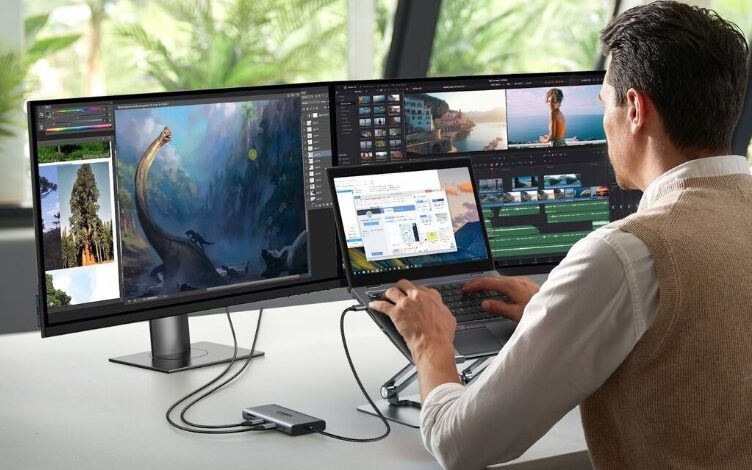
The last few years have really changed how businesses operate. These days, most offices are completely laptop-based. While many businesses still have a lot of desks, the way employees work means they no longer need to be used.
Desktop workstations contribute to the loss of productivity with issues like missing ports, messy cables, and inefficient use of workspace. Because of this, from a productivity standpoint, using a docking station with an office laptop setup is a must. A docking station makes it so you can easily maintain an uninterrupted workflow rather than having to plug and unplug devices.
In this blog, we’ll cover the productivity benefits of docking setups, the most important features, and how your organization can avoid common pitfalls when implementing these setups.
How a Docking Station Solves Tangible Office Desk Connectivity Problems
A docking station is the office setup solution that simplifies and optimizes the connectivity of office desks. It works as a connection point for all the single employee workstation that are covered through a single connection. A hub for multiple monitors, keyboard, printer, extra storage devices, wired internet, etc. This simplifies cable management.
Less mess means more professional workspaces and increased desk productivity. With these benefits, Daisy chaining setups improve workflow. Employees just sit down, connect one cable, and start working. No wasted time on troubleshooting issues.
Converting Work Laptops Into Full Business Workstations
Flexibility and efficiency are both achieved with the right office docking station. A laptop workstation solution ensures offices retain the flexibility of laptops along with the full functionality of a workstation.
Single cable desk setups offer seamless connectivity to external displays and input devices, along with power. Employees can juggle multiple tasks on different screens, managing documents, emails, dashboards, and calls. With proper height placement of the monitors coupled with external devices, workstation ergonomics are better. This reduces the office hours strain on the body.
Addressing these challenges often requires a more holistic approach to workspace planning, and services like Office Fit Out Mansfield can help businesses create integrated desk setups that improve ergonomics, organisation, and overall productivity.
Docking Station Types Used in Business and Office Work Environments
Different types of work roles define which type of docking stations are most suited to office work laptops. The right docking station is defined by the daily work tasks, desk setup, and devices.
USB-C Docking Stations for Contemporary Laptops and Everyday Activities
USB-C docking stations for office functions are tailored to modern business laptops with slim construction. These docks integrate power, data, and video transmission to a single cable, which suits most office workflows. One cable docking stations for office use streamline the setup process, and wirelessly maintains a clean desk, ideal for home offices and conventional corporate furnishings.
Top-Tier Docking Stations for Dual-Monitor Workstation Setups
Docking stations for dual monitors at work are essential for data-intensive functions. A high-performance laptop docking station for office use helps in seamless report writing, data analytics, and management dashboards. These setups are extremely advantageous for multi-screen visibility in finance, operations, and leadership.
Universal Docking Stations for Hot Desking and Shared Office Desks
In agile workspaces, a desk with a universal docking station provides varying laptop models. A docking station for desk sharing supports the rotating teams to connect and work without a desk rearrangement. This versatility caters to universal docks for hot desking and hybrid office setups.
Top Docking Station Features for Office Productivity
When following a docking station buying guide for offices, it’s important to focus on features that contribute to office productivity.
Support for External Monitors and Office Multitasking
A docking station for office monitors supports single or dual-monitor setups. With a laptop docking setup, screen expansion helps improve focus and decreases the need to switch between tasks. Dual monitors significantly improve productivity. However, resolution and refresh rates should be aligned with business requirements rather than overly high-end specs.
Multiple USB Ports for Peripherals and Office Accessories
A docking station for the keyboard and mouse ensures that vital peripherals are always connected. A docking station for office accessories can also be used to connect printers, scanners, and external drives. Also, to help avoid excessive ports and simplify setups, a wired Ethernet connection improves Internet stability.
Charging Laptops for Full Workdays
Docking stations that do laptop charging for offices are more convenient than separate chargers. Also, with a docking station, power delivery for work, laptops stay charged throughout the business day. Matching power output to laptop requirements ensures safe operation and reduces desk clutter caused by extra cables.
How Docking Stations Save Desk Space And Improve Efficiency
The impact of a dock on office productivity extends beyond the individual desks. Employees start their days more quickly, desks stay consistent, and there are fewer support requests for IT teams. A dock for clean office desks also enhances the overall workspace, improving the professional look for both staff and visitors.
Best Office Use Cases For Docking Stations
Editing Docking Stations For Administrative And Office Staff
A dock for office employees facilitates workflow with emails, document handling, and calls. With a productivity dock set up for desk work, multitasking is simple, and daily setup time decreases.
Docking Stations For Management And Operations Teams
A dock for managers’ desks allows leaders to efficiently track reports and dashboards. A dock for workflow efficiency provides multi-screen accessibility and sustained performance throughout lengthy decision-making processes.
Docking Stations For IT Managed Office Environments
A dock for IT-managed desks permits standardized hardware configurations. A dock for standardized office setups simplifies troubleshooting, decreases downtime, and provides ease of scaling as teams grow.
The Impact of Office Mistakes, Docking Stations, and Lack of Productivity
Many mistakes in offices with docking stations stem from blindly overlooking basic details. Occasional office docking setups include overlooking laptop port compatibility, buying Optional features that will likely never get used, not enough power and display features, and cable management that in this case, will not hinder your desk organization.
How to Arrange Docking Stations for Office Desks in a Neat and Systematic Way
The first step in getting your docking stations arranged is making sure to connect all of the accessories to the docking stations. Make sure that your monitors are positioned at eye level to make them more comfortable to use. A cable management system will help you record your clutter and maintain an orderly workspace. Its features will allow you to enjoy a clutter-free workspace and improve your productivity.
Conclusion
To maximize the productivity of an office, a docking station should be selected based on its necessary functions. A docking station’s orderability, compatibility, and functionality are the most important factors that should be taken into consideration. Office setups should be designed so that their time and effort accomplishing the respective tasks are maximized.