Charles Augins: The Remarkable Life and Legacy of a Multifaceted Stage and Screen Talent
Introduction
Charles Augins was one of those rare performers whose talent could not be limited to just one field. He built a respected career as an actor, choreographer, dancer, director, and creative force whose work touched theatre, film, and television. Although many viewers remember him for memorable on-screen appearances, his deeper legacy rests in the extraordinary range of his contributions behind the scenes as well. From stage choreography to cult television to major fantasy cinema, Augins created a body of work that still attracts curiosity and admiration today. Public sources identify him as American-born, with a career that became especially significant in the United Kingdom’s performing arts scene.
Who Was Charles Augins?
Charles Augins was an American-born performer born in Virginia in September 1943. Over the years, he became known not simply as an actor, but as a versatile creative professional who could move between dance, stage direction, television performance, and film choreography with impressive ease. That ability to work across so many artistic disciplines made him stand out in an industry where specialization is far more common. Rather than following a narrow path, he developed a career based on adaptability, craft, and presence. His professional profile is most often associated with acting credits in productions such as Red Dwarf, Blake’s 7, and Labyrinth, but those titles only hint at the broader value of his contributions.
Early Career and Artistic Foundation
The available public biographies on Charles Augins are not filled with excessive personal detail, which means much of his public identity comes through his work rather than private storytelling. What is clear is that he developed into a highly capable performance artist with strong roots in movement and stagecraft. Those roots helped shape the rest of his career. A performer trained in both physical expression and dramatic presentation often brings a unique level of control to the stage, and that combination appears to have defined Augins’ professional journey. He was not just someone who appeared in productions. He helped shape how performances looked, felt, and moved.
A Career Built on Versatility
One of the most impressive things about Charles Augins was his range. Many artists become known for a single role or a single medium, but Augins earned recognition across several. He acted in television, contributed choreography to major productions, directed stage work, and remained active in live performance culture. This versatility helped him build lasting professional respect. It also explains why his name still appears in discussions among theatre fans, film enthusiasts, and viewers of classic British television. His career serves as an example of how long-term artistic influence often comes from consistency and skill rather than constant celebrity exposure.
Charles Augins in Television
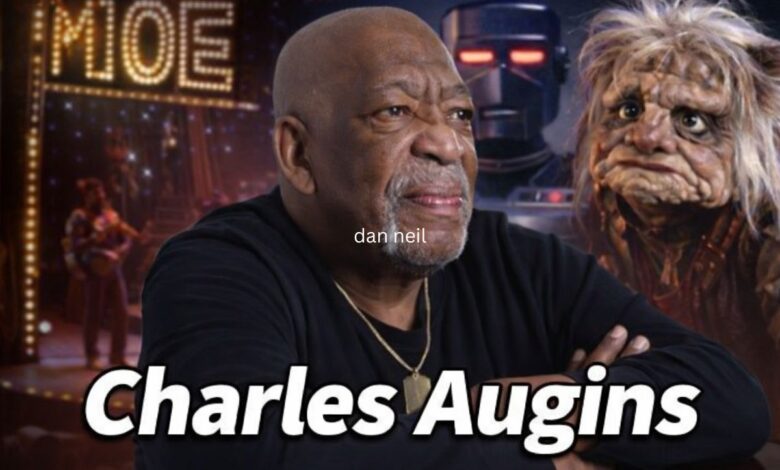
For television audiences, Charles Augins is especially remembered for his appearance as Queeg 500 in Red Dwarf. That role gave him a lasting place in the memory of fans of British science fiction comedy. Even though it was not the sort of career-defining lead role that dominates tabloids or award-season conversations, it became one of those standout appearances that viewers continue to remember years later. In cult television, a strong guest performance can achieve an almost timeless appeal, and Augins managed exactly that.
The Red Dwarf Connection
His association with Red Dwarf became even more notable because he was also connected to one of the show’s most famous performance elements: the “Tongue Tied” dance sequence. That contribution highlights why Augins was so different from performers who only worked on one side of production. He was able to leave a mark both in front of the camera and behind it. That dual contribution strengthened his cult status among fans and helped cement his reputation as a creative with a distinctive skill set.
Other Television and Screen Credits
Beyond Red Dwarf, Augins also appeared in Blake’s 7, another well-known British science fiction series. His screen résumé further includes work connected to Labyrinth, a film that remains beloved across generations for its fantasy style and visual imagination. IMDb lists him among the people known for that film as well as for Blake’s 7 and Red Dwarf, confirming the breadth of his screen career. These are not minor cultural references. They are titles with lasting fan communities, which means Augins’ work continues to be rediscovered by new audiences.
Charles Augins in Theatre
If television made Charles Augins recognizable to broad audiences, theatre made him deeply respected within the performing arts world. His work in stage choreography was serious, accomplished, and award-winning. Theatre often demands more technical discipline than screen work because movement, rhythm, timing, and audience response must all function in real time. Augins was clearly more than capable of meeting that standard.
Olivier Award Recognition
A major milestone in his career came in 1991, when he won the Laurence Olivier Award for Best Theatre Choreographer for Five Guys Named Moe. This is one of the strongest public indicators of his standing in theatre. Winning an Olivier Award places a creative artist in distinguished company, and it signals that Augins was not merely participating in the theatre world but actively excelling in it. Recognition at that level reflects both artistic quality and professional impact.
Why This Achievement Matters
Awards do not define an artist completely, but they do reveal how the industry values a person’s work at a specific moment. In Augins’ case, the Olivier win matters because it confirms his excellence in choreography at one of the highest levels of British theatre. For anyone researching Charles Augins today, this achievement is essential to understanding why he deserves attention beyond nostalgic television references. He was an accomplished stage artist whose influence reached well beyond a single production.
Work Beyond Acting and Choreography
Charles Augins also had a creative life that extended into music and arts education. Public biographical material notes that he worked as a singer, including backing vocals for recording artists, and that he released a solo single in the early 1980s. There is also public information indicating that he served as Chair of the Dance Department at the Duke Ellington School of the Arts in Washington, DC. These details reinforce the picture of a man whose career was not limited to performance alone. He also contributed to artistic development and education, which adds another important layer to his legacy.
Legacy and Lasting Interest
Charles Augins remains a figure of continuing interest because his career sits at the intersection of several creative worlds. Fans of British television know him from Red Dwarf and Blake’s 7. Theatre audiences know the importance of his choreography and his Olivier-winning work. Film lovers recognize his connection to Labyrinth. That combination makes him more than a niche name. He represents a kind of artistic professionalism that is increasingly appreciated with time: skilled, disciplined, collaborative, and quietly influential. Publicly available sources also report that he died on 19 July 2025 at the age of 81, marking the end of a long and respected career.
Quick Info About Charles Augins
Quick Facts
- Full Name: Charles Augins
- Birth: September 17, 1943
- Birthplace: Virginia, United States
- Profession: Actor, dancer, choreographer, director
- Best Known For: Red Dwarf, Blake’s 7, Labyrinth, Five Guys Named Moe
- Major Award: 1991 Laurence Olivier Award for Best Theatre Choreographer
- Notable Role: Queeg 500 in Red Dwarf
- Reported Death: July 19, 2025, age 81
FAQs About Charles Augins
1. Who was Charles Augins?
Charles Augins was an American-born actor, dancer, choreographer, and director known for his work in theatre, television, and film, especially in the UK.
2. What is Charles Augins best known for?
He is widely remembered for playing Queeg 500 in Red Dwarf and for his choreography work, especially on Five Guys Named Moe.
3. Did Charles Augins win any major awards?
Yes. He won the Laurence Olivier Award for Best Theatre Choreographer in 1991 for Five Guys Named Moe.
4. Was Charles Augins involved in Labyrinth?
Yes. Public credits connect him with Labyrinth as choreographer, and he is listed by IMDb among the people known for the film.
5. When did Charles Augins die?
Public sources report that Charles Augins died on July 19, 2025, at the age of 81.