Alan Hudson Footballer: The Rise, Fall, and Legacy of a Chelsea Icon
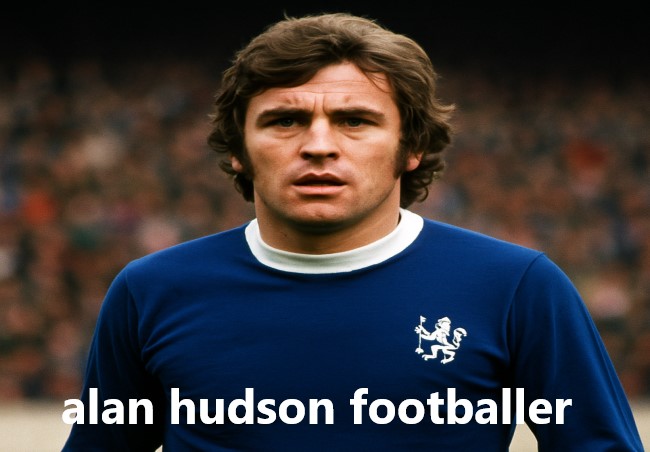
Alan Hudson footballer—a name that resonates deeply with English football fans who witnessed the beautiful game in the 1970s and 1980s. Known for his flair, vision, and technique, Hudson was more than just a midfield maestro—he was an artist on the pitch. From his early days at Chelsea FC to international appearances with England, and eventually into the darker sides of fame and struggle, Hudson’s story is one of triumph, tragedy, and transformation.
This article offers a deep dive into the career of Alan Hudson Chelsea footballer, his life after retirement, his role as a football agent, and his influence beyond the game—including his inspiration for cultural productions like Football Factory.
Early Life and Youth Career
Born for the Game
Born on June 21, 1951, in Chelsea, London, Alan Hudson grew up in the heart of football culture. From a young age, it was clear he had extraordinary talent. He joined Chelsea as an apprentice in his teens and quickly rose through the youth ranks.
Chelsea’s Local Wonderkid
Hudson was a product of Chelsea’s youth system at a time when local players were not only encouraged but expected to embody the club’s identity. His elegant style and deep understanding of the game made him stand out even among talented contemporaries.
The Chelsea Years: Glory and Setbacks
Alan Hudson Chelsea Footballer Legacy
Hudson made his first-team debut for Chelsea in 1969, and over the next few years, he established himself as one of the brightest talents in English football. As part of a gifted side that included Peter Osgood and Charlie Cooke, Hudson helped Chelsea lift the European Cup Winners’ Cup in 1971.
FA Cup Disappointment
In 1970, Chelsea reached the FA Cup Final against Leeds United. Unfortunately, Hudson missed the replay due to injury. Though Chelsea triumphed, it was a personal low point in an otherwise rising career.
Playing Style and Influence
Hudson was known for his creativity, passing range, and ability to control the tempo of the game. He was the beating heart of Chelsea’s midfield, often compared to the likes of Andrea Pirlo or Paul Scholes for his intelligence and technical skill.
Stoke City and Arsenal: A Career of Highs and Lows
Stoke City Revival
In 1974, Hudson transferred to Stoke City for a then-club record fee. There, he revived his career under manager Tony Waddington. The club reached its best-ever league finish (5th place) in the 1974–75 season, with Hudson pulling the strings in midfield.
Arsenal Frustrations
Two years later, he moved to Arsenal. Despite flashes of brilliance, Hudson’s time at Arsenal was plagued by injuries and off-field controversies. He made 36 league appearances and played in the 1978 FA Cup Final, which Arsenal lost to Ipswich Town.
NASL and American Chapter
Seattle Sounders and Beyond
Hudson later joined the Seattle Sounders in the North American Soccer League (NASL), where he played from 1979 to 1983. He was selected for the NASL All-Star team and brought European class to the American game during its formative years.
Leadership and Mentorship
In the US, Hudson became more than just a player—he mentored younger teammates and helped raise the standard of the league.
International Career: A Talent Underused
England Caps and Controversy
Hudson earned only two caps for the England national team in 1975, both memorable—especially a 2–0 victory against West Germany. Despite his talent, clashes with management and previous disciplinary bans restricted his appearances.
Life After Football: Struggles and Reinvention
Post-Retirement Turmoil
After retiring due to injury in the mid-1980s, Hudson’s life took a dramatic turn. He struggled with alcoholism, financial ruin, and homelessness. In 1997, he was struck by a car in a near-fatal accident that left him in a coma for weeks.
Health Battles
Hudson underwent over 70 operations and later fought prostate cancer. Despite the adversity, he remained vocal and visible in footballing circles.
Alan Hudson Football Agent and Author
Reinventing His Role in Football
After his playing career, Hudson briefly worked as a football agent, advising young players and sharing his unique perspective. Though not as commercially visible as today’s super-agents, he was respected for his honesty and understanding of the game.
The Working Man’s Ballet
Hudson authored multiple books, most notably The Working Man’s Ballet, which received praise for its candid and poetic take on football and life. His writing cemented his place as a voice of experience and reflection in English football culture.
Cultural Legacy: Alan Hudson and Football Factory
Alan Hudson Football Factory Inspiration
Hudson’s gritty life and insights into the working-class footballer experience were part of the inspiration behind Football Factory, the cult film that explored hooliganism and football culture. His raw, unfiltered personality made him a natural muse for authors and filmmakers delving into football’s darker corners.
Personal Life and Reflections
A Life of Lessons
Today, Hudson lives a quieter life, occasionally appearing in media and podcasts. He continues to reflect on football, fame, and recovery with candid honesty. His legacy is not just what he did on the pitch but what he’s endured off it.
Influence on Future Generations
Many young midfielders have cited Hudson’s style as an influence. Clubs like Chelsea still honor him as one of their finest homegrown talents.
Conclusion
Alan Hudson footballer was a genius with the ball at his feet and a complex man off the pitch. His journey from Chelsea’s golden boy to troubled legend, and ultimately a survivor, paints a picture of football’s many faces. Whether remembered as Alan Hudson Chelsea footballer, a mentor, or an author, his story is both a cautionary tale and a tribute to resilience.
From football fields to hospital wards, from glory to hardship, Hudson remains an unforgettable character in English football history.