Brown Willy Cornwall: The Highest Peak of Myth, Nature, and Adventure
Introduction to Brown Willy Cornwall
Brown Willy Cornwall is more than just the highest point in the county—it is a symbol of natural grandeur, steeped in history, local legend, and outdoor adventure. Known in Cornish as Bronn Wennili (“hill of swallows”) or Bronn Ewhella (“highest hill”), this rugged hill rises majestically on Bodmin Moor and attracts hikers, historians, and spiritual seekers alike.
Location: Where Is Brown Willy in Cornwall?
Situated in the heart of Bodmin Moor, Brown Willy lies about four miles southeast of Camelford and not far from the famous Jamaica Inn. It is nestled among a cluster of wild, windswept tors and open moorland. The remoteness of the hill adds to its mystical charm, making it one of the most striking landmarks in Cornwall.
How High Is Brown Willy in Cornwall?
The summit of Brown Willy stands at an impressive 1,378 feet (420 meters) above sea level, making it the highest natural point in Cornwall. On a clear day, the view from the top stretches far across the county and even beyond, sometimes offering glimpses as distant as the Devon hills. Its elevation is a magnet for walkers and nature lovers looking to experience Cornwall’s raw, elevated beauty.
Geography and Natural Features
The Shape and Structure of the Hill
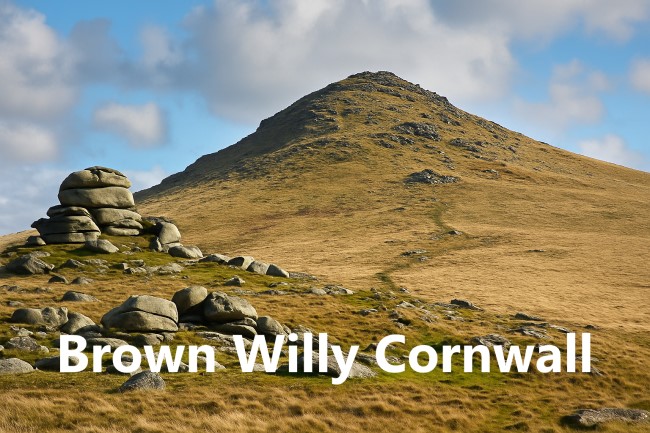
From the northern side, Brown Willy appears as a sharp peak, but from the south and east, it stretches into a rugged ridge. Its granite formations and rocky outcrops are typical of Bodmin Moor’s dramatic landscape. The hill’s slopes are often dotted with marshy patches and streams, contributing to the wild and unspoiled feeling of the terrain.
Surrounding Landmarks
Nearby peaks such as Rough Tor and Showery Tor form part of a popular circular walk. Brown Willy itself sits near the source of the River Fowey, one of Cornwall’s major rivers. The summit is marked by ancient cairns, and the surrounding moorland is home to Bronze Age remains, standing stones, and stone circles, giving the whole area an aura of deep time and mystery.
History and Cultural Significance
Name Origins and Interpretations
The name Brown Willy is a subject of debate. The Cornish Bronn Wennili translates to “hill of swallows,” a poetic reference to the birds that often grace its skies. Others suggest Bronn Ewhella, meaning “highest hill,” a more literal and topographical interpretation. The name has evolved over centuries and appeared in historical texts as early as the 13th century.
Local Myths and Spiritual Beliefs
Brown Willy has long been considered a sacred site. According to local legend, it was the burial place of an ancient Cornish king. The Aetherius Society, a spiritual organization, even considers it one of Britain’s “holy mountains” and celebrates “Charging Day” there every November. These traditions add a spiritual dimension to the hill’s natural majesty.
Brown Willy Cornwall Walk: A Popular Hiking Destination
Planning Your Walk
The Brown Willy Cornwall walk is a favorite among hikers. One of the most common routes begins at the base of Rough Tor, another popular granite peak nearby. From there, walkers follow a path across the open moor, crossing small streams and marshy ground before ascending the rocky slope of Brown Willy.
Trail Highlights
-
Distance: Roughly 5–7 miles round-trip
-
Difficulty: Moderate
-
Time: 2 to 3 hours depending on pace and conditions
-
Best Time to Visit: Spring to autumn for clearer weather and drier trails
What to Bring
Because of the exposed terrain and unpredictable weather, hikers are advised to bring:
-
Waterproof boots
-
A map and compass (GPS not always reliable)
-
Weatherproof clothing
-
Snacks and water
Weather and the Brown Willy Effect
What Is the Brown Willy Effect?
Brown Willy is known in meteorological circles for a phenomenon called the Brown Willy Effect, where weather systems form heavy showers or thunderstorms over the hill and move eastward, sometimes leading to severe flooding. One such instance contributed to the 2004 Boscastle Flood, a major natural disaster in Cornwall.
Unpredictable Weather
The area around Brown Willy is known for sudden changes in weather. Sunshine can quickly turn to mist or rain, especially at the summit. This contributes to its mystique but also requires hikers to be cautious and prepared.
Archaeology and Ancient Remains
Bronze Age Cairns and Monuments
At the summit of Brown Willy are two large Bronze Age cairns, piles of stones that likely served as burial sites or markers. One of these cairns sits beside the Ordnance Survey trig point, used for mapping the region. The area is also dotted with the remains of prehistoric settlements, giving archaeologists and history buffs plenty to explore.
Alignments and Stone Circles
There are possible alignments between Brown Willy, nearby Rough Tor, and ancient sites like the Stannon Stone Circle. These have led to theories about the site’s use in ancient astronomy or spiritual ceremonies, further deepening its cultural relevance.
Cornwall Brown Willy: A Symbol of the Region
In Literature and Popular Culture
Brown Willy appears in poetry and fiction as a symbol of Cornwall’s wild, untamed spirit. Poet Laureate Sir John Betjeman referenced the hill in his autobiographical poem Summoned by Bells, capturing its haunting presence on the moor.
Local Identity and Pride
Despite occasional jokes about its name, locals hold Brown Willy in high regard. It’s seen as a natural monument and a point of pride for Cornwall. In 2012, a campaign to restore its original Cornish name stirred public debate, revealing how closely connected the hill is to Cornish identity.
Conclusion: Why Visit Brown Willy Cornwall?
Brown Willy Cornwall is not just the highest hill in the county—it’s a gateway to ancient history, myth, and untamed beauty. Whether you’re a walker looking for a new challenge, a history lover eager to trace Bronze Age footsteps, or a traveler seeking the soul of Cornwall, Brown Wily delivers an experience that is both humbling and unforgettable.
From the Brown Wily Cornwall walk to its spiritual significance, its ever-changing weather to the sweeping panoramic views—this peak is a cornerstone of the Cornish landscape. So, lace up your boots and venture into the heart of Bodmin Moor, where Cornwall’s highest hill stands waiting to share its secrets.