barnes neville wallis: The Brilliant Engineer Who Changed Wartime Aviation
Introduction
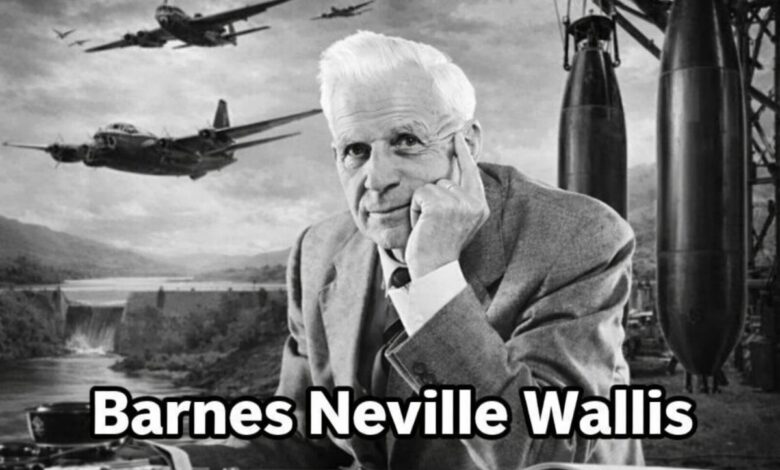
barnes neville wallis is remembered as one of the most inventive engineering minds of the twentieth century. Although many people know his name because of the famous bouncing bomb, his career was far broader and far more important than a single wartime invention. He was an engineer who combined imagination with precision, and he had the rare ability to turn unusual ideas into practical designs. From airships to bomber construction and from advanced bomb design to postwar aerospace research, his work left a lasting mark on British engineering history.
What makes Wallis such a fascinating figure is that he did not become important through publicity or showmanship. Instead, he earned his reputation through deep technical thinking, patience, and a willingness to challenge accepted limits. At a time when war demanded new solutions, he approached problems with the mind of a designer and the determination of a scientist. That is why his legacy still attracts interest from historians, aviation enthusiasts, and readers who want to understand how engineering can shape world events.
Who Was Barnes Neville Wallis?
Sir Barnes Neville Wallis was born on 26 September 1887 in Ripley, Derbyshire, England, and later became one of Britain’s most respected engineers and inventors. He worked for Vickers and played a major role in the development of airships, aircraft structures, and wartime weapons. He died on 30 October 1979 in Leatherhead, Surrey, after a long career that stretched from the early age of aviation into the modern aerospace era.
His public fame is tied most strongly to the bouncing bomb used during the Dambusters raid in the Second World War, but reducing his career to that one achievement does not do him justice. Wallis was also central to the development of geodetic airframe construction and later designed the massive Tallboy and Grand Slam bombs. His life tells the story of a man whose technical imagination continually moved ahead of his time.
Early Life and Education
A Curious Mind from an Early Age
Barnes Wallis grew up in difficult but disciplined circumstances. His family later moved to south London, and his early years were shaped by both financial limitation and strong expectations around education and self-improvement. He attended Christ’s Hospital and later Haberdashers’ Aske’s Hatcham Boys’ Grammar School, but he left formal schooling fairly young and moved into engineering work through apprenticeship rather than a traditional university path.
Learning Through Practical Engineering
This practical beginning mattered. Wallis trained first in marine engineering and gained experience through hands-on industrial work. Later, he earned an engineering degree through the University of London External Programme. That path gave him a blend of workshop realism and theoretical understanding, which became one of his greatest strengths. He was not only capable of imagining radical designs, but also able to understand whether those designs could actually be built and used.
Barnes Neville Wallis and the Age of Airships
Before he became associated with wartime bomb design, Wallis built his reputation in the field of airships. He joined Vickers and worked on rigid airship projects, including HMA No. 9r and later the famous R100. These projects helped establish him as a serious aeronautical designer at a time when large airships were seen as symbols of technological ambition and national pride.
The Importance of the R100
The R100 remains one of the most notable chapters in his early career. Wallis used innovative structural ideas and helped advance lightweight design principles. His work on airships was not just about making something large fly; it was about finding efficient ways to build strong yet light structures. Those ideas later influenced other parts of his engineering career. The airship era may have faded, but for Wallis it served as a powerful training ground for the innovations that followed.
Geodetic Construction and Aircraft Innovation
A New Way to Build Aircraft
One of Wallis’s most important technical achievements was the development of geodetic construction, sometimes described as geodesic design. This method used an interwoven structural framework that gave aircraft strength while keeping weight under control. It was an elegant solution because it balanced durability and efficiency, two qualities essential in aviation.
The Vickers Wellington Connection
This structural approach became especially famous through the Vickers Wellington bomber, one of Britain’s important aircraft during the Second World War. The Wellington’s design helped demonstrate Wallis’s gift for turning advanced theory into effective engineering. Instead of relying only on brute strength, he preferred smart structural thinking. That pattern appears again and again throughout his career and is one reason he is still admired by engineers today.
The Bouncing Bomb and the Dambusters Raid
How the Idea Was Born
The achievement most closely tied to barnes neville wallis is the invention of the bouncing bomb, officially called Upkeep. In 1942, he worked on a concept for a bomb that could skip across water, avoid defensive barriers, strike a dam wall, sink, and then explode at the correct depth. It was a highly unusual idea, but Wallis supported it with experiments and calculations until it became a practical weapon.
Operation Chastise
The weapon was used in Operation Chastise in May 1943 by 617 Squadron, in what became known as the Dambusters raid. The mission targeted dams in Germany’s Ruhr Valley, which were important to industrial production and infrastructure. The operation became one of the most famous wartime air attacks in British history, and Wallis’s name became permanently connected with it. At the same time, he was deeply affected by the loss of aircrew involved in the raid, showing that he never viewed invention as a matter of glory alone.
Beyond the Bouncing Bomb
It is important to remember that Wallis did not stop with the Dambusters concept. He later developed the Tallboy and Grand Slam bombs, often described as earthquake bombs because they were designed to destroy hardened targets through massive explosive force and shock effects. These weapons reflected the same pattern seen in his earlier work: he studied a difficult military problem and then created a carefully engineered answer rather than a simple larger version of existing designs.
Postwar Vision
After the war, Wallis continued to work on ambitious aerospace ideas, including research connected with supersonic flight and swing-wing technology. He also became a pioneer in model testing and remote control methods for aircraft research. This later period shows that he was never trapped by the past. Even after becoming famous, he kept looking ahead to the future of aviation and engineering.
Honours, Recognition, and Legacy
Barnes Wallis received major recognition for his work. He became a Fellow of the Royal Society in 1945 and was knighted in 1968. These honours reflected not only his wartime contributions but also his broader standing as a major British engineer. His career crossed several technological eras, and in each one he contributed ideas that pushed design thinking forward.
Why He Still Matters Today
Wallis remains relevant because his life represents more than a historical anecdote. He shows how creative engineering can solve problems that first appear impossible. He also reminds us that innovation often comes from disciplined thinking, repeated testing, and a refusal to accept ordinary answers. Even today, his name is associated with technical courage, originality, and the belief that engineering can change the course of history.
Quick Info About Barnes Neville Wallis
Full Name
Barnes Neville Wallis
Born
26 September 1887
Birthplace
Ripley, Derbyshire, England
Died
30 October 1979
Nationality
British
Known For
Bouncing bomb, geodetic airframe design, Tallboy, Grand Slam, airship engineering
FAQs About Barnes Neville Wallis
Who was Barnes Neville Wallis?
Barnes Neville Wallis was a British engineer and inventor best known for creating the bouncing bomb used in the Dambusters raid, while also contributing to airship and aircraft design.
What did Barnes Neville Wallis invent?
He is most famous for the bouncing bomb, but he also developed geodetic airframe concepts and designed the Tallboy and Grand Slam bombs.
Why is Barnes Neville Wallis important?
He is important because his engineering innovations influenced wartime aviation, bombing strategy, and structural aircraft design.
Did Barnes Neville Wallis only work on bombs?
No. He also worked on airships, aircraft construction, and later aerospace research involving advanced flight concepts.
Was Barnes Neville Wallis knighted?
Yes. He was knighted in 1968 and had already been elected a Fellow of the Royal Society in 1945.