Bernadette Devlin: The Fiery Voice of Irish Civil Rights
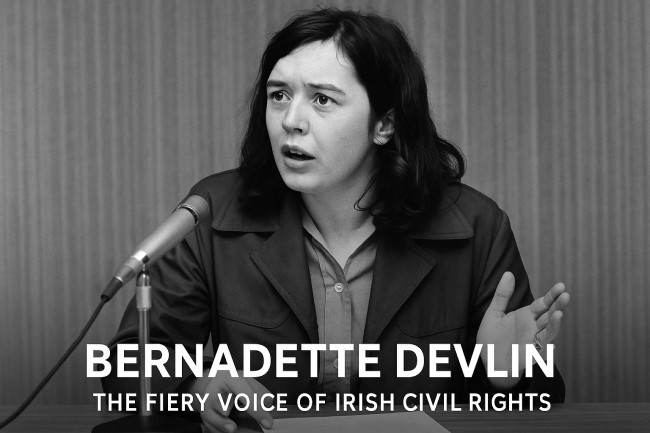
Bernadette Devlin, later known as Bernadette Devlin McAliskey, stands as one of the most powerful voices in the history of Irish civil rights. A fearless woman who entered the political battlefield at just 21, she became the youngest Member of Parliament (MP) in Westminster at the time. With her sharp intellect, unwavering courage, and fiery speeches, Devlin challenged the deeply rooted injustices faced by the Catholic minority in Northern Ireland. This article offers a comprehensive look at the life, activism, and legacy of a woman who remains a symbol of resistance.
Early Life and Upbringing
Roots in Cookstown
Born on 23 April 1947 in Cookstown, County Tyrone, Northern Ireland, Josephine Bernadette Devlin was raised in a working-class Catholic family. The early loss of her parents forced her to take on adult responsibilities far sooner than most. Despite these hardships, she pursued an education in psychology at Queen’s University Belfast, where her activism first began to take shape.
Influenced by Injustice
Growing up in a region plagued by sectarian discrimination deeply influenced Devlin’s perspective. The political and social injustices endured by the Catholic community during the 1950s and 1960s were not simply observed by Devlin—they ignited a fire within her that would fuel her civil rights campaigns for decades to come.
The Rise of a Young Political Star
People’s Democracy Movement
During her time at university, Devlin co-founded the People’s Democracy movement—a student-led organization advocating for civil rights in Northern Ireland. Inspired by the American civil rights movement, the group organized marches demanding equality in housing, voting rights, and employment.
Parliamentary Breakthrough
In 1969, at just 21 years old, Devlin won the Mid Ulster by-election as an independent socialist candidate. Breaking with tradition, she chose to take her seat in the UK House of Commons, rejecting the policy of abstentionism practiced by many Irish nationalists. This marked a pivotal moment in Irish political history.
Fearless in Parliament
A Historic Maiden Speech
Devlin made headlines with her maiden speech in April 1969, in which she delivered a passionate critique of British policies in Northern Ireland. Speaking as the youngest woman ever elected to Westminster at the time, she captivated the House with her eloquence and courage.
The Slap That Shocked Britain
Devlin’s most dramatic moment came after Bloody Sunday in 1972, when British troops killed 14 unarmed civil rights protesters in Derry. Furious over Home Secretary Reginald Maudling’s defense of the British army, she crossed the floor of Parliament and slapped him across the face—a symbolic act of protest that cemented her reputation as uncompromising and fearless.
From Civil Rights to Socialist Advocacy
Formation of the IRSP
After her term in Parliament, Bernadette Devlin McAliskey helped establish the Irish Republican Socialist Party (IRSP). The party aimed to bridge the gap between nationalism and socialism, promoting not only Irish unity but also economic and social justice for all working-class people.
Breaking Away
Devlin’s time with the IRSP was short-lived. She left the organization due to concerns over its paramilitary associations. Despite this, she continued to advocate for non-violent political reform and remained a prominent voice in Northern Ireland’s political discourse.
Assassination Attempt and Survival
Loyalist Attack
In 1981, Bernadette and her husband, Michael McAliskey, were shot multiple times in front of their children by members of the Ulster Defence Association (UDA). The couple miraculously survived, despite sustaining severe injuries. The assassination attempt only strengthened public admiration for Devlin, who returned to activism with even greater determination.
Bernadette Devlin McAliskey and the Fight for Equality
STEP and Community Empowerment
In the late 1990s, Devlin co-founded the South Tyrone Empowerment Programme (STEP). The organization works to support migrant workers, empower local communities, and promote social inclusion. Under her leadership, STEP became a model for grassroots activism in Ireland.
International Attention
Though admired at home and abroad, Devlin Bernadette was not without controversy. In 2003, she was barred from entering the United States due to her previous conviction for incitement during the Battle of the Bogside. The ban was a reminder of how her uncompromising stance often unsettled powerful institutions.
Legacy and Continued Influence
A Feminist Trailblazer
Bernadette Devlin McAliskey is not only a political icon but also a feminist pioneer. In a male-dominated political landscape, she shattered stereotypes and defied expectations. Her presence in Parliament challenged conventional gender roles and inspired generations of women to enter public life.
Documentaries and Memoirs
Her memoir, “The Price of My Soul”, published in 1969, provides personal insight into her experiences during the early years of the Troubles. She has also been the subject of several documentaries, including “Bernadette: Notes on a Political Journey”, which chronicles her activism and personal life.
Bernadette Devlin in Today’s Context
Modern Relevance
As issues of social justice, migration, and political oppression remain relevant today, Bernadette Devlin’s voice continues to resonate. Her critiques of state power, commitment to working-class solidarity, and relentless activism serve as lessons for today’s movements around the world.
Recognition and Respect
While she never sought political office again, Devlin McAliskey remains a respected figure in both Irish and international human rights circles. Her lifelong dedication to justice, regardless of personal cost, places her among the most influential political activists of the 20th century.
Conclusion
Bernadette Devlin, also known as Bernadette Devlin McAliskey or simply Devlin Bernadette, is more than a historical figure—she is a symbol of courage, integrity, and unrelenting commitment to justice. From her early days as a student activist to her role as a community leader and survivor of violence, Devlin has consistently challenged systems of power and oppression. Her life and legacy remain deeply relevant in a world still striving for equality, fairness, and dignity for all.