Essie Williams: The Untold Story of Essie Mae Washington-Williams and Her Legacy
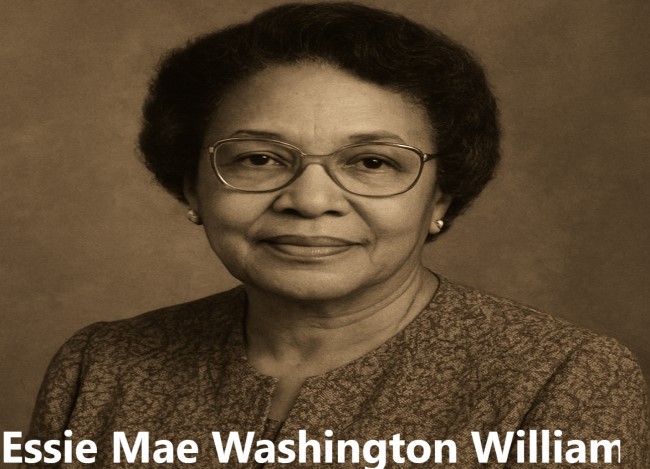
Essie Williams, widely known as Essie Mae Washington-Williams, is a powerful figure in American history whose life story intersects deeply with the themes of race, identity, secrecy, and political power. As the biracial daughter of longtime U.S. Senator Strom Thurmond—a staunch segregationist—and an African-American maid, Essie Mae Williams remained in the shadows for much of her life. When her truth finally emerged in the early 2000s, it not only shocked the nation but also challenged the public narrative of one of America’s most prominent politicians.
This article delves into her early life, her relationship with her father, and how she navigated the social and political tides of the 20th century. Through this, we uncover the remarkable story of Essie Washington Williams, also known by her full name Essie Mae Washington-Williams.
Early Life of Essie Mae Washington-Williams
A Hidden Childhood
Essie Mae Williams was born on October 12, 1925, in Aiken, South Carolina. Her mother, Carrie Butler, was a 16-year-old African-American domestic worker employed by the Thurmond family. The father, Strom Thurmond, was 22 at the time and a member of one of the most prominent white families in the South.
For most of her early life, Essie lived under a cloud of secrecy. Raised in Pennsylvania by her aunt and uncle, she initially believed they were her biological parents. At the age of 13, she was told the truth—that she was the daughter of Strom Thurmond.
A Complex Relationship with Her Father
Despite the obvious social and political barriers of the time, Strom Thurmond maintained a quiet relationship with Essie Washington Williams. While he never acknowledged her publicly, he provided financial support and paid for her education. This paradox of private care and public denial would shape much of her emotional journey.
Education and Career
Academic Accomplishments
With her father’s financial help, Essie Mae Williams attended South Carolina State College, a historically black university. She later earned a Master’s degree in education from the University of California, Los Angeles (UCLA).
A Life Dedicated to Teaching
For over 27 years, Essie Mae Washington-Williams worked as a teacher in the Los Angeles Unified School District. Her focus was on stability, family, and service to her community. Though she was living under a veil of silence about her lineage, she never let that hinder her professional aspirations or personal integrity.
Coming Forward: A Historic Revelation
The Public Acknowledgement
After Strom Thurmond’s death in 2003, Essie Mae Williams publicly acknowledged their familial relationship. In December of that year, she held a press conference that reverberated across the United States. The revelation that a man who had built a political career partly on segregationist policies had a biracial daughter was earth-shattering.
Reactions and Acceptance
The Thurmond family, after initial hesitation, accepted her claims. Her name was later added to the Thurmond family monument at the South Carolina Statehouse. The truth about Essie Mae Washington-Williams forced the public to reassess the legacy of Strom Thurmond and the complex nature of race relations in America.
Personal Life of Essie Mae Williams
Family and Children
In 1948, Essie Mae Williams married Julius Williams, a lawyer. Together they had four children. Her husband passed away in 1964, and she raised their children primarily on her own. Her family was her rock, offering emotional support throughout her years of silence and eventual public recognition.
Memoir and Reflections
In 2005, she published a memoir titled Dear Senator: A Memoir by the Daughter of Strom Thurmond. The book gave a personal account of her life experiences, her relationship with her parents, and the inner conflict of being tied to a powerful figure who stood against racial equality.
The Legacy of Essie Mae Washington-Williams
Symbol of Reconciliation
Essie Mae Washington-Williams became a symbol of reconciliation and the complicated history of race in America. Her story is not just a personal narrative but a mirror reflecting a divided nation and the potential for healing.
Influence on Modern Discussions
Her life has sparked numerous discussions on race, identity, and historical revisionism. In the age of DNA testing and genealogical research, her courageous decision to speak out paved the way for others to do the same.
Alternate Names and Related Keywords
Understanding Her Various Names
Throughout her life, Essie Mae Williams was known by several names, reflecting different parts of her identity and life story:
-
Essie Mae Washington-Williams (full name post-revelation)
-
Essie Washington Williams (alternate form used in some records)
-
Essie Mae Williams (used in professional and personal circles)
-
Essie Williams (general shorthand for her name)
Each version of her name is tied to key chapters in her life, and each holds weight in understanding the person behind the public figure.
Challenges and Triumphs
A Life of Silence
One of the most powerful elements of her story is her decision to remain silent for so long. This was not out of shame, but rather a conscious effort to protect her family, her father’s career, and perhaps her own emotional well-being.
Speaking the Truth
When Essie Mae Washington-Williams finally spoke her truth, it was not for revenge or political motive. Instead, it was an act of liberation—for herself, her children, and generations of African Americans who lived with unanswered questions and concealed histories.
Death and Posthumous Recognition
Essie Mae Williams passed away on February 4, 2013, in Columbia, South Carolina. She was 87 years old. Though she spent most of her life outside the spotlight, her final years were filled with recognition, respect, and reflection.
Her story continues to be studied, honored, and cited in books, documentaries, and educational curricula as a pivotal moment in understanding American history from a personal, racial, and political lens.
Conclusion
Essie Williams, better known as Essie Mae Washington-Williams, lived a life marked by dignity, courage, and grace. Her story is not simply about being the secret daughter of a senator—it is a profound narrative about the intersection of personal identity and national history.
Through strength and silence, and later through truth and publication, Essie Mae Williams etched her name in American history. Her legacy serves as a reminder that even the most closely guarded truths have the power to change how we see the world—and ourselves.