Maurice Johnston: The Controversial Legend Who Changed Scottish Football Forever
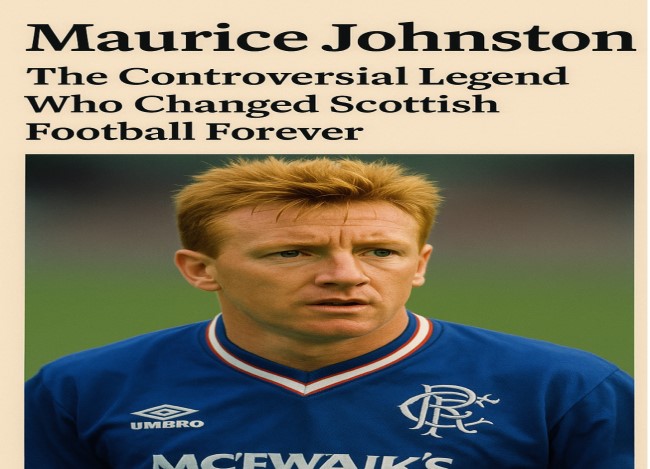
Maurice Johnston is one of the most iconic and polarizing figures in the history of Scottish football. Known for his incredible talent on the field and his controversial decisions off it, Johnston’s name continues to evoke strong emotions among fans of Celtic, Rangers, and the Scottish national team. This article explores his life, career, and the legacy he left behind—especially his infamous transfer from Celtic to Rangers.
Early Life and Football Beginnings
Hailing from Glasgow
Maurice Johnston was born on April 13, 1963, in Glasgow, Scotland. From an early age, it was evident that football would be his life. Growing up in a working-class neighborhood, he idolized Scottish football greats and dreamed of one day wearing the national jersey. His talent was spotted early, and he quickly rose through the youth ranks.
Professional Debut at Partick Thistle
Johnston began his professional career with Partick Thistle in 1981. Even at this early stage, he showcased a natural goal-scoring instinct that set him apart. During his time at the club, he scored an impressive 41 goals in 85 appearances, which caught the attention of clubs across the UK.
Rise to Stardom in England and Scotland
Watford and FA Cup Final
In 1983, Johnston moved to Watford, then under the management of Graham Taylor. He continued his impressive form by scoring 23 goals in one season. His efforts helped Watford reach the 1984 FA Cup Final, although they eventually lost to Everton. Nonetheless, Johnston’s reputation as a clinical striker was firmly established.
Joining Celtic
In 1984, Maurice Johnston returned to Scotland to join Celtic. This marked a significant moment in his career. Over three seasons, he scored over 50 league goals and became a fan favorite at Celtic Park. He helped the club win the Scottish Premier Division title in 1985-86 and the Scottish Cup in 1985. At this point, Johnston was not just a rising star—he was a full-blown icon.
Maurice Johnston Rangers Move: The Ultimate Shock
The Transfer That Shook Scottish Football
In 1989, the football world was left stunned. Maurice Johnston, who had already agreed to return to Celtic from French club Nantes, did the unthinkable—he signed for Rangers instead. The move was historic for multiple reasons. Not only had he previously played for Celtic, but Johnston was also a Roman Catholic, breaking Rangers’ unwritten policy of not signing Catholic players at the time.
Reaction from Fans and Media
The backlash was immediate and intense. Celtic fans branded him a traitor, while many Rangers supporters were conflicted or openly hostile. Johnston received boos and abuse from both sets of fans, but he held firm. His signing is widely seen as a turning point in Scottish football, signaling the beginning of the end of sectarian recruitment policies.
Proving His Worth at Ibrox
Despite the controversy, Johnston delivered on the pitch. He scored crucial goals, including a memorable winner against Celtic in an Old Firm derby at Ibrox. During his time at Rangers, he made 76 appearances and scored 31 goals, helping the club to win multiple titles. In doing so, he earned the respect of many who had once doubted him.
International Career with Scotland
Consistent Performances on the World Stage
Johnston made his debut for the Scottish national team in 1984. Over the next seven years, he earned 38 caps and scored 14 goals. He was part of the squad that played in the 1990 FIFA World Cup in Italy. His ability to perform at the highest level showcased his quality and dedication to the national team.
Key Contributions
One of Johnston’s most memorable moments in a Scotland jersey came during the 1986 World Cup qualifiers. His goals and leadership were instrumental in helping Scotland secure a place in the tournament. Even amid controversy at the club level, he remained a valued and professional figure in the national setup.
Life After Playing
Transition to Management
After retiring from professional football, Johnston moved into coaching and management. He spent time managing New York Red Bulls (then MetroStars) and Toronto FC in Major League Soccer. Although his managerial career did not reach the same heights as his playing days, he continued to contribute to the sport he loved.
Influence in the U.S.
Johnston played a key role in developing soccer in North America. His presence helped raise the profile of the sport in the region, and his insights into talent identification proved valuable to the clubs he worked with.
Legacy and Cultural Impact
Breaking Barriers
Maurice Johnston will forever be remembered not just for his goals, but for breaking the sectarian barrier in Scottish football. His transfer from Celtic to Rangers forced clubs and fans alike to reevaluate outdated prejudices and move toward a more inclusive game.
Recognition and Awards
Despite the controversy, Johnston has been honored for his contributions to football. He has been inducted into the Scottish Football Hall of Fame and remains one of the highest-scoring forwards in Scottish history.
The Dual Identity
It’s rare for a player to be both hated and respected by fans of rival clubs, but Johnston occupies that unique space. His career challenged norms and ignited conversations that were long overdue in Scottish society.
Conclusion
Maurice Johnston is a name that continues to stir debate and admiration in equal measure. A gifted striker, a bold trailblazer, and a man who stood firm in the face of immense pressure, Johnston’s story is one of courage and conviction. From his early days at Partick Thistle to his groundbreaking move to Rangers, his journey changed the landscape of Scottish football forever.
For fans, historians, and anyone interested in the beautiful game, Maurice Johnston remains a symbol of how sport can transcend boundaries and provoke real societal change.