How AI is Revolutionizing Enterprise Decision-Making and Risk Management
Artificial Intelligence (AI) has evolved from being a supporting technology to a strategic driver of enterprise growth and efficiency. Today, leading organizations are using AI to gain real-time visibility, automate decision-making, and strengthen governance frameworks. As industries face increasing complexity, the ability to leverage AI for smarter, faster, and safer operations has become a defining competitive edge.
In this article, we’ll explore how AI enhances risk management, improves control mechanisms, and supports the creation of intelligent decision-making systems—empowering enterprises to operate with greater precision and confidence.
AI in Control and Risk Management: Building Trust and Transparency
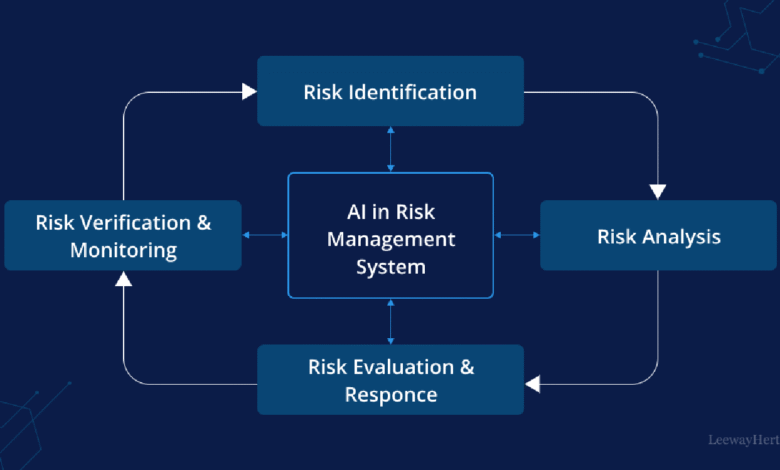
Effective risk management is essential for long-term business success, but traditional approaches often rely on manual monitoring and fragmented systems. This is where AI in control and risk management is making a transformative impact.
Automating Risk Detection and Reporting
AI-driven systems continuously monitor transactions, behaviors, and process deviations, identifying potential risks in real time. Machine learning algorithms analyze large datasets across finance, compliance, and operations to flag anomalies—such as policy violations or data inconsistencies—before they escalate into costly issues.
By automating data aggregation and validation, enterprises can generate more accurate reports while freeing teams from repetitive, manual tasks. This improves both speed and consistency in compliance workflows.
Enhancing Predictive and Preventive Capabilities
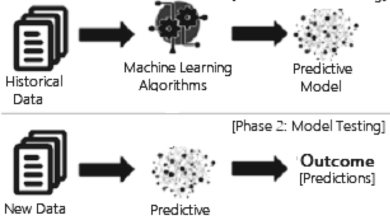
Unlike static risk models, AI continuously learns from new data, helping organizations predict potential failures or frauds. Predictive analytics enables proactive interventions—whether it’s forecasting financial risks, identifying cybersecurity threats, or detecting operational inefficiencies.
Through these insights, businesses gain the ability to respond quickly to emerging risks, improving overall resilience and compliance with regulatory standards.
Center of Intelligence: Enabling Smarter Enterprise Decisions
While AI is powerful in automating risk management, its broader potential lies in creating a unified, intelligent ecosystem for enterprise decision-making. The Center of Intelligence concept developed by ZBrain helps organizations achieve precisely that—integrating data, insights, and AI models into a central decision layer.
Unifying Data Across the Organization
A major challenge enterprises face is data fragmentation. The Center of Intelligence acts as a unified hub, aggregating data from disparate systems such as CRMs, ERPs, and analytics platforms. This integrated foundation ensures that decision-makers work with a single source of truth.
With data harmonized, AI models can generate actionable insights across departments—from finance to operations—improving accuracy and strategic alignment across the organization.
Accelerating AI-Driven Decision Flows
ZBrain’s Center of Intelligence goes beyond dashboards and analytics—it orchestrates end-to-end decision flows. By connecting to AI agents and workflows, it enables real-time intelligence for key business operations such as risk scoring, compliance validation, and customer engagement.
This orchestration allows enterprises to move from reactive to predictive decision-making. Instead of merely tracking outcomes, organizations can now anticipate them, driving measurable improvements in efficiency and performance.
Real-World Applications of AI in Risk and Decision Management
- Financial Risk Assessment
AI systems analyze historical financial data, market patterns, and customer behavior to assess creditworthiness or identify irregularities. This reduces manual intervention and enhances transparency in financial decision-making.
- Compliance Automation
Regulatory compliance can be complex and time-consuming. AI automates document reviews, monitors transactions for potential violations, and ensures adherence to ever-evolving legal frameworks—minimizing human error and ensuring consistency.
- Operational Efficiency
AI-powered agents can predict equipment failures, optimize supply chain decisions, and improve workforce planning. These optimizations lead to higher productivity and lower operational risks.
- Cybersecurity and Data Protection
With cyber threats on the rise, AI strengthens data protection by identifying unusual access patterns or security breaches in real time, helping organizations mitigate risks before significant damage occurs.
The Future: AI as a Governance Partner
As organizations integrate AI deeper into their decision ecosystems, transparency, explainability, and ethical use will be critical. AI is no longer just a tool—it’s becoming a governance partner that helps organizations stay compliant, accountable, and agile in a data-driven world.
Platforms like ZBrain’s Center of Intelligence are pioneering this shift by combining generative AI, automation, and domain-specific orchestration to deliver responsible and effective enterprise intelligence.
Conclusion
AI is redefining how organizations manage control, compliance, and decision-making. From predictive risk assessment to real-time operational intelligence, enterprises are moving toward a future where AI doesn’t just support decisions—it drives them.
By integrating capabilities such as AI in control and risk management and leveraging a Center of Intelligence, businesses can transform fragmented operations into cohesive, intelligent ecosystems—where every decision is data-driven, compliant, and strategically aligned.