How to Help Your Teen Create a Five-Year Plan That Allows for Changes
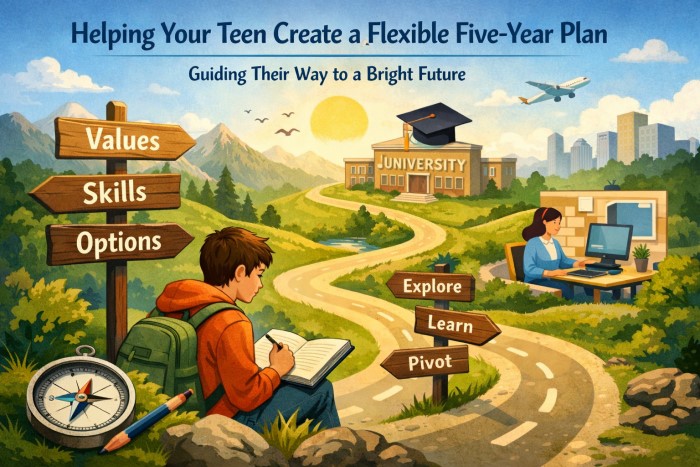
Asking a teenager where they see themselves in five years often results in a blank stare or a noncommittal shrug. It is hardly surprising. At sixteen or seventeen, five years feels like a lifetime. It is the vast, scary gap between sitting in a classroom and potentially starting a career, travelling the world, or finishing university. While planning is obviously useful, the pressure to stick to a rigid path can be crushing. The secret isn’t to build a concrete roadmap. Instead, aim for a compass that points them in the right direction but allows for plenty of scenic detours.
Start with Values, Not Job Titles
When you sit down to chat about the future, the temptation is to jump straight to careers. “Do you want to be an accountant? A graphic designer?” Try shifting the conversation. Ask about what actually matters to them.
Focus on the kind of life they want to lead. Do they value creativity over stability? Do they want to work outdoors or in a bustling city office? By focusing on values, you help them build a foundation that survives a change of heart. If a young person decides they no longer want to be a vet but still values helping living things, they might pivot to conservation or charity work without feeling like they have failed.
This approach is particularly powerful when fostering teens. If you are fostering in Birmingham or elsewhere, the children in your care may have experienced significant upheaval, so grounding their future plans in their personal values gives them a sense of control and identity that isn’t tied to external circumstances. It anchors them.
The “Pencil, Not Pen” Philosophy
Encourage the idea that plans are drafts, not contracts. A five-year plan written in ink can feel like a prison sentence if interests change, and let’s face it, they almost certainly will.
Suggest breaking the five years down into smaller, manageable chunks. Focus heavily on the first twelve months, loosely on the next two years, and keep the final two years as a “dream phase.” This structure reduces anxiety. It tells your teen that they only need to be sure about their immediate next steps. If they are looking at apprenticeships or college courses, remind them that these are stepping stones, not final destinations.
For foster carers, this flexibility is vital. A foster child might be navigating emotional complexities or changes in their living situation. Reassuring them that it is okay to change their mind relieves the pressure to be “perfect” or to have everything figured out immediately.
Emphasise Skills Over Specifics
The job market shifts rapidly. Roles that exist today might look completely different by the time your teen enters the workforce. Therefore, a robust plan should focus on acquiring transferable skills.
Encourage them to list skills they want to learn rather than just positions they want to hold. Maybe they want to become fluent in a second language, learn to code, or get comfortable with public speaking. These are assets they can carry into any future, regardless of whether they become a teacher or a tech entrepreneur. When they see their plan as a collection of tools they are gathering, rather than a single mountain they must climb, the journey becomes exciting rather than daunting.
Normalise the Pivot
One of the most valuable lessons you can teach is that changing direction is a sign of growth, not failure. Share stories of people who started in one field and ended up in another. Perhaps you have friends who studied history but now run a bakery, or an uncle who was a mechanic and is now a nurse.
Make it clear that the goal of the five-year plan is to get moving, not to arrive at a specific coordinate. If they start a university course and realise it isn’t for them, or if they take a gap year and decide to start a business, that is simply part of the process.
Moving Forward with Confidence
Helping your teen map out their future is about empowering them to make choices, not making the choices for them. Whether you are a parent or are fostering teens, your role is to be the sounding board and the safety net. By focusing on their core values, keeping plans flexible, and celebrating the acquisition of skills, you help them create a vision of the future that excites them. They don’t need to know exactly where they will be in five years; they just need to know they have the resilience and the tools to handle whatever that future looks like.