Jamaican Dialect Phrases: A Complete Guide to Understanding Patwa
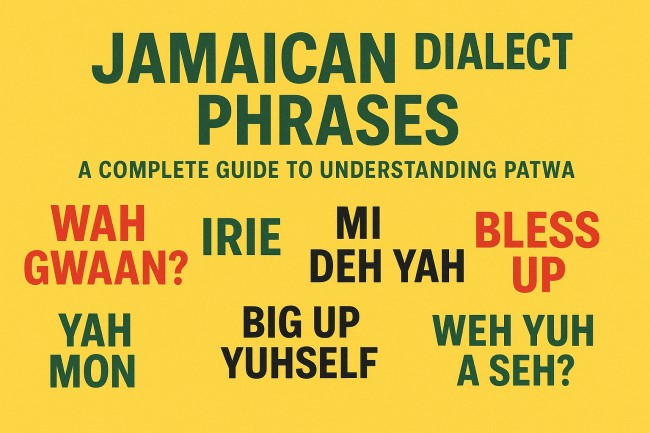
Jamaican dialect, widely known as Jamaican Patois or Patwa, is a vibrant and expressive language that blends English with African, Spanish, and indigenous influences. It is not just a way of speaking—it is a deep cultural expression that reflects Jamaica’s history, identity, and rhythm of life. Although English is the country’s official language, Patois is what you’ll hear most often in everyday conversations across the island.
In this guide, we will explore popular Jamaican dialect phrases, their meanings, and how they are used in daily life, so you can understand and even speak like a true Jamaican.
The Cultural Importance of Jamaican Dialect
Jamaican Patois is more than words—it carries emotions, traditions, and a sense of belonging. Speaking or understanding Patois helps connect people, whether they are locals or visitors. It is used in reggae music, storytelling, markets, family gatherings, and even politics.
The dialect emerged during the colonial era, influenced heavily by West African languages spoken by enslaved Africans, mixed with English and bits of Spanish and Portuguese. Over time, it evolved into a unique language with its own grammar and vocabulary.
Common Jamaican Dialect Phrases and Meanings
Everyday Greetings and Responses
-
Wah Gwaan? – What’s going on? / How are you?
-
Mi deh yah – I’m here / I’m doing fine.
-
Irie – Everything is good / Positive vibes.
-
Yah mon – Yes, man / Absolutely.
These greetings are used casually among friends, family, or even strangers, setting a friendly and welcoming tone.
Friendly and Respectful Expressions
-
Bless up – A greeting or farewell wishing blessings.
-
Big up yuhself – Show respect to yourself / Keep doing well.
-
Nuff respect – Much respect to you.
Such phrases carry deep cultural meaning, often used to encourage, show appreciation, or express goodwill.
Everyday Situational Phrases
-
Small up yuhself – Make some room (often in crowded spaces).
-
Mi soon come – I’ll be right back (though “soon” can mean a little while in island time).
-
Weh yuh a seh? – What are you saying? / What’s up?
-
Likkle more – See you later.
These phrases are useful when navigating daily life in Jamaica, especially in markets, transportation, or casual chats.
Understanding the Sound and Rhythm of Patois
Pronunciation Style
Jamaican Patois often shortens English words, drops certain consonants, and changes vowel sounds. For example:
-
“Them” becomes dem.
-
“With” becomes wid.
-
“Don’t” becomes nuh or noh.
This gives Patois its smooth, melodic sound, which is part of its charm.
Grammar Differences from Standard English
Patois grammar doesn’t follow traditional English rules, yet it has its own consistency:
-
No verb conjugations – The same verb form is used for all tenses.
-
Repetition for emphasis – Words may be doubled for stronger meaning (e.g., soon soon means very soon).
-
Dem used as a plural marker – “Di gyal dem” means “the girls.”
Jamaican Dialect in Music and Culture
Jamaican phrases are at the heart of reggae, dancehall, and ska music. Many global music lovers first hear Patois through Bob Marley’s songs or modern dancehall tracks. These phrases add authenticity and cultural depth to the lyrics.
Beyond music, Patois is used in poetry, theater, and Jamaican films. Its rhythm and humor make storytelling more engaging and lively.
Tips for Learning Jamaican Dialect Phrases
1. Listen to Locals
Immersing yourself in conversations, whether in person or through Jamaican media, helps you pick up authentic pronunciation and tone.
2. Practice with Native Speakers
Trying phrases in real conversation not only improves fluency but also shows cultural appreciation.
3. Learn Context and Body Language
In Jamaican culture, tone, facial expressions, and gestures often go hand-in-hand with phrases. The same phrase can mean different things depending on delivery.
4. Start with Common Words
Build your vocabulary gradually—begin with greetings, basic questions, and expressions of gratitude.
Fun and Unique Patois Expressions
Food and Lifestyle References
-
Nyam – To eat.
-
Run a boat – Cook and share a meal together.
-
Sweet mi – I’m enjoying this / This makes me happy.
Humorous or Colorful Phrases
-
Every mickle mek a muckle – Every small effort adds up.
-
Mi belly full – I am satisfied (often after a meal).
-
Trouble deh deh – There is trouble.
Why Jamaican Dialect Phrases Matter Globally
As Jamaica’s culture spreads worldwide through tourism, music, and sports, its dialect becomes a global symbol of identity. Many people use Jamaican phrases without even realizing their origins. From reggae concerts to international travel, Patois serves as a cultural bridge connecting Jamaica to the world.
Final Thoughts
Learning Jamaican dialect phrases is not just about speaking differently—it’s about understanding a people, their history, and their way of life. Patois carries the heartbeat of Jamaica, with every word infused with rhythm, humor, and resilience. Whether you’re visiting the island, enjoying its music, or simply curious about languages, embracing these phrases will enrich your cultural experience.
So next time you greet someone with Wah Gwaan or say Bless up, know that you are carrying forward a tradition that has stood the test of time—one that continues to inspire, connect, and spread joy across the globe.